Aspects of Traveller Culture
Barrel Top Wagons
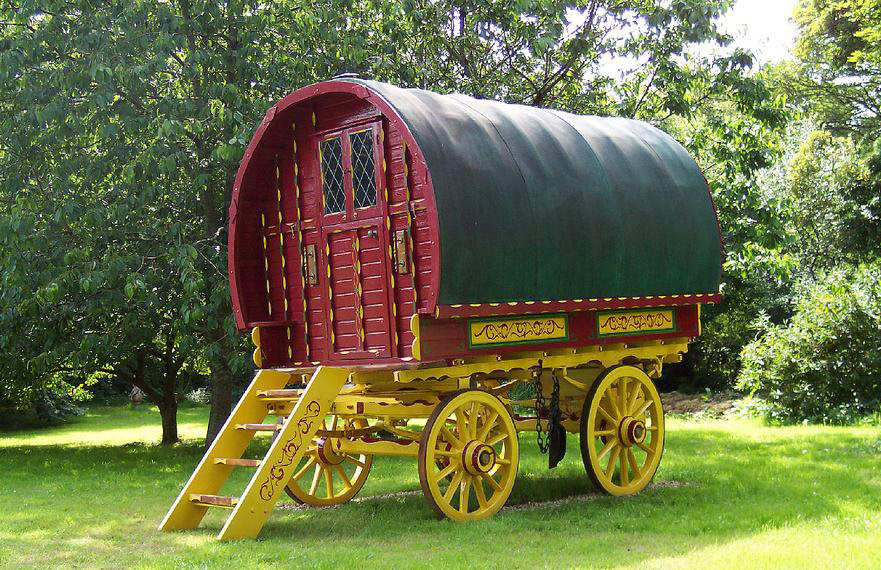
Barrel Top Wagons are now a symbol of Traveller Culture. Traveller men used to make their own wagons; the wagon was made of timber and carved for decoration. The engravings were individual designs and the wagon was painted in primrose yellow and maroon red. The roof of the wagon was made with timber bows and covered with a green canvas. The wheels were covered with iron bands and underneath the body of the wagon was a big brass stock. The wagons were drawn by horses, the families used often walk alongside the wagon so the horse wouldn’t tire.
The interior of the wagon was decorated by the women in bright colours. Colourful cotton material was fitted between the bows. Inside the door was the grub box which held the food. There were benches along the side of the wagon inside and heat was supplied by a queen stove which was also used for cooking. Cooking was often done outside on an open fire as well.
Families were often bigger long ago there is a bed in the wagon with another underneath it. The other family members slept outside under a tent if there wasn’t enough room inside.
Horse Shoe Pockets
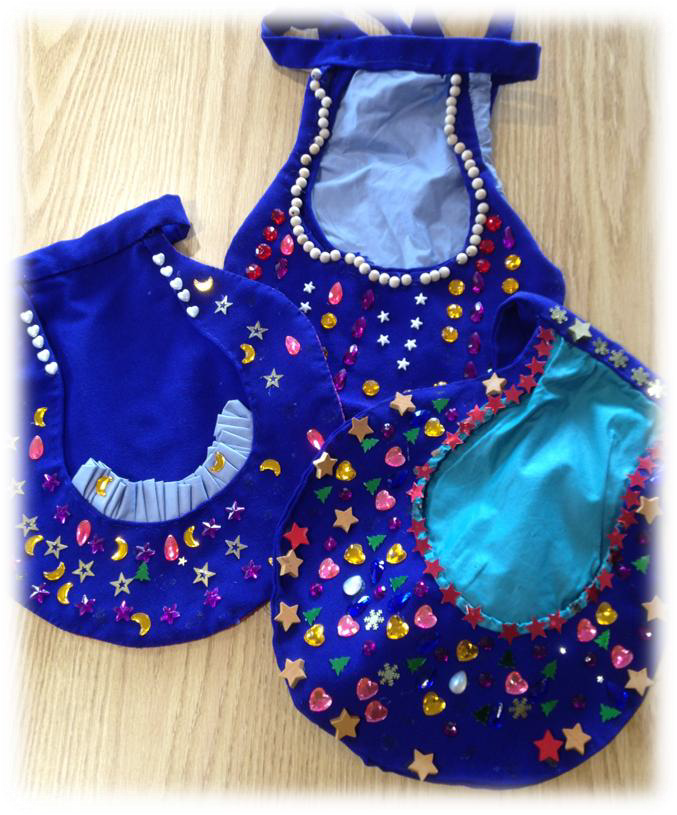
Horse Shoe Pockets or Beady Pockets were worn by Traveller Women every day. For special occasions smart, more decorative pockets were worn. The Horse Shoe Pocket was an important item of clothing as it held the women’s money, cigarettes, jewellery and if travelling a long road: the baby’s bottle. Hair combs and soap could also be found in the Pockets. As the women travelled around they swapped trinkets and buttons with other women to put on the pockets to remind them of the places, events and people. The pockets were hand-made and were highly decorated; they were worn like an apron to the side around the women’s waist.
Flower Making
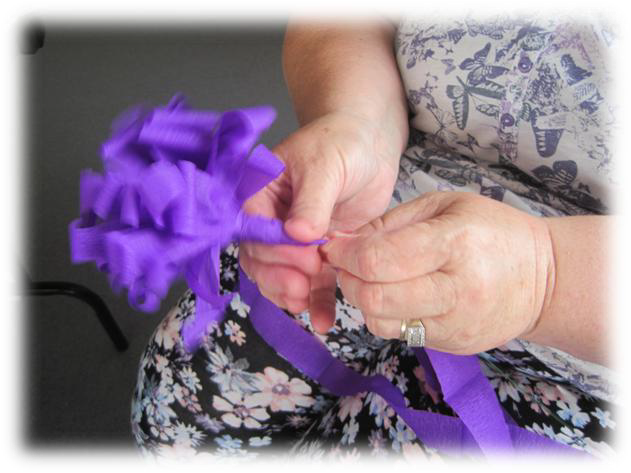
Traveller women used to make Paper Flowers to sell to the families while they were on the road. Paper flowers added colour to the houses which were usually very dark. Paper flowers last much longer than garden flowers or wild flowers. They were very popular as garden flowers weren’t as common as they are now. Only the rich people had flower gardens; any land that families had was mainly used by the family for planting vegetables.
Tin-smithing
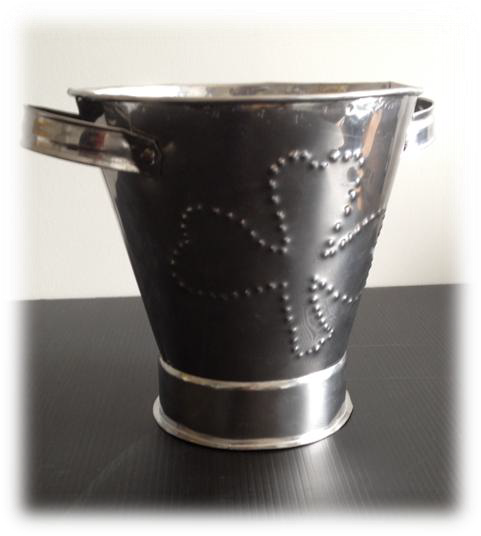
Tin-smithing was a trade that Traveller men had. Before the time of plastics, tin ware was used by families for drinking, eating, cooking and in the farm as milk churns, buckets etc. These items often needed repairs or to be replaced so the Tinsmith would mend or make the tin items, sadly with the introduction of plastics the need for a travelling Tinsmith fell into decline, there are now only a handful of Tinsmiths in Ireland.